Where should a porta potty go on a job site?
Pick flat, stable ground first. ADA Standards section 302.1 calls for surfaces that are stable, firm and slip resistant, and that rule applies whether you're setting a standard porta potty rental or an ADA accessible porta potty. Keep the unit within reach of the service truck: our crews need a clear path in and don't want to cross planters, curbs or parked equipment to reach the tank valve. Avoid low spots that pool after rain, since Beaumont's clay soil holds water longer than sand does. Set units at least 5 feet from doors, windows and air intakes. For construction sites, match placement to your crew size using how many porta potties do I need, and check the porta potty rental checklist before delivery day. If you're staging a restroom trailer rental instead, add clearance for leveling jacks and a hose bib.
Do I need a permit for porta potty placement in Beaumont?
Placement in the public right of way needs confirming with the city before delivery. We don't guess at ordinance numbers here. If your unit sits entirely on private property, most jobs move forward without extra paperwork, but a sidewalk or curb-lane placement is a different conversation with the city. The same caution applies to dumpster placement permit questions. A dumpster placement permit cost varies by jurisdiction and by whether the container sits on pavement, grass or the street, so ask before the roll-off dumpster rental truck ever leaves the yard. Review dumpster permit requirements and porta potty permit requirements together if you're running both on one site, since they're rarely approved through the same desk.
How much clearance does a roll-off dumpster need?
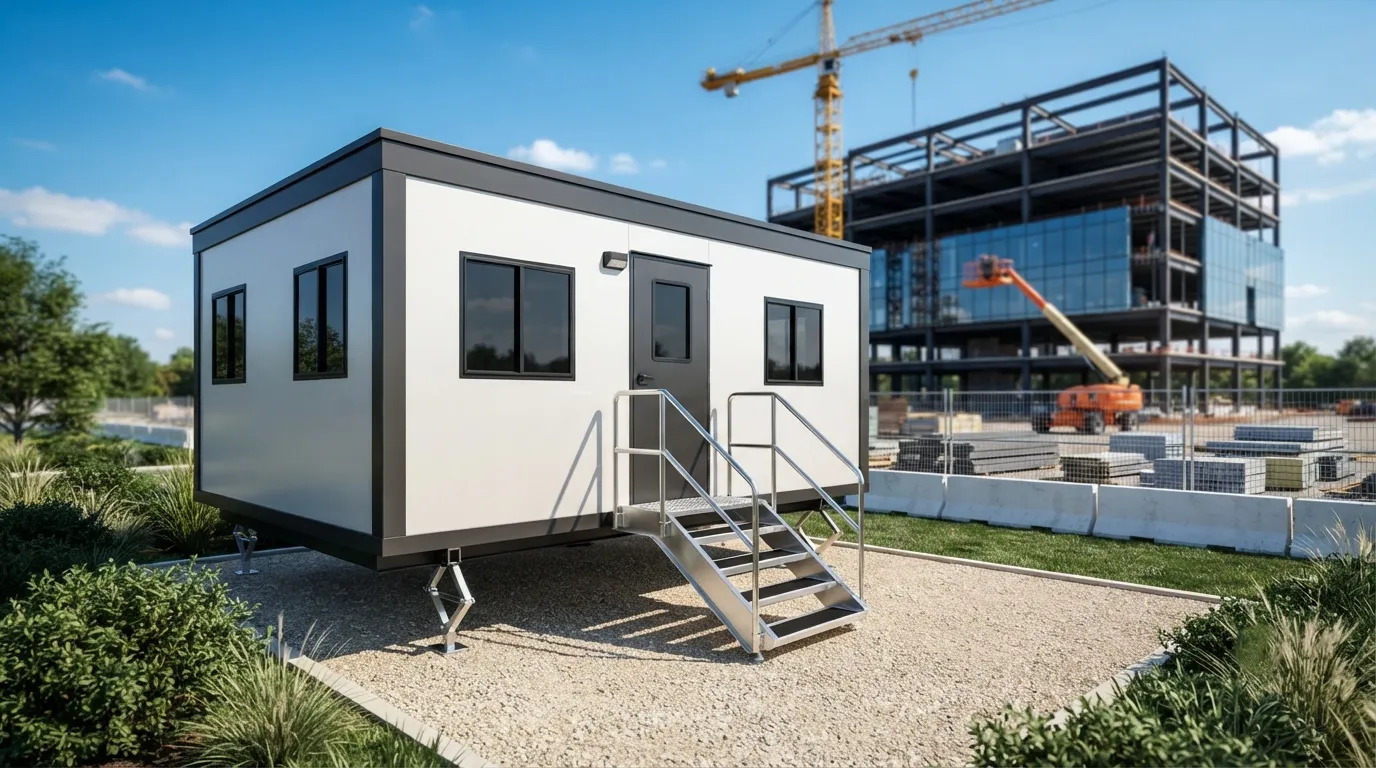
A roll-off delivery needs about 60 feet of straight clearance behind the truck to back in and drop the container safely. That number doesn't shrink for a 10 yard dumpster rental versus a 30 yard dumpster rental; the truck bed length drives it, not the box size. Check dumpster sizes and dimensions before you commit to a spot on a tight urban lot. Keep dumpsters clear of what cannot go in a dumpster items nearby, like open containers of paint or chemicals, and mind dumpster weight limits if the surface is asphalt in July heat. OSHA 1926.25 requires scrap and debris cleared from work areas, so placement should never block the path crews use to haul trash to the box. If you're staging a mobile office trailer alongside, the same 60-foot rule applies for its own drop, and mobile office trailer replacement doors are a separate maintenance call, not a placement issue, so route that through mobile office trailer rental support instead.
Where should septic and handwashing equipment sit relative to toilets?
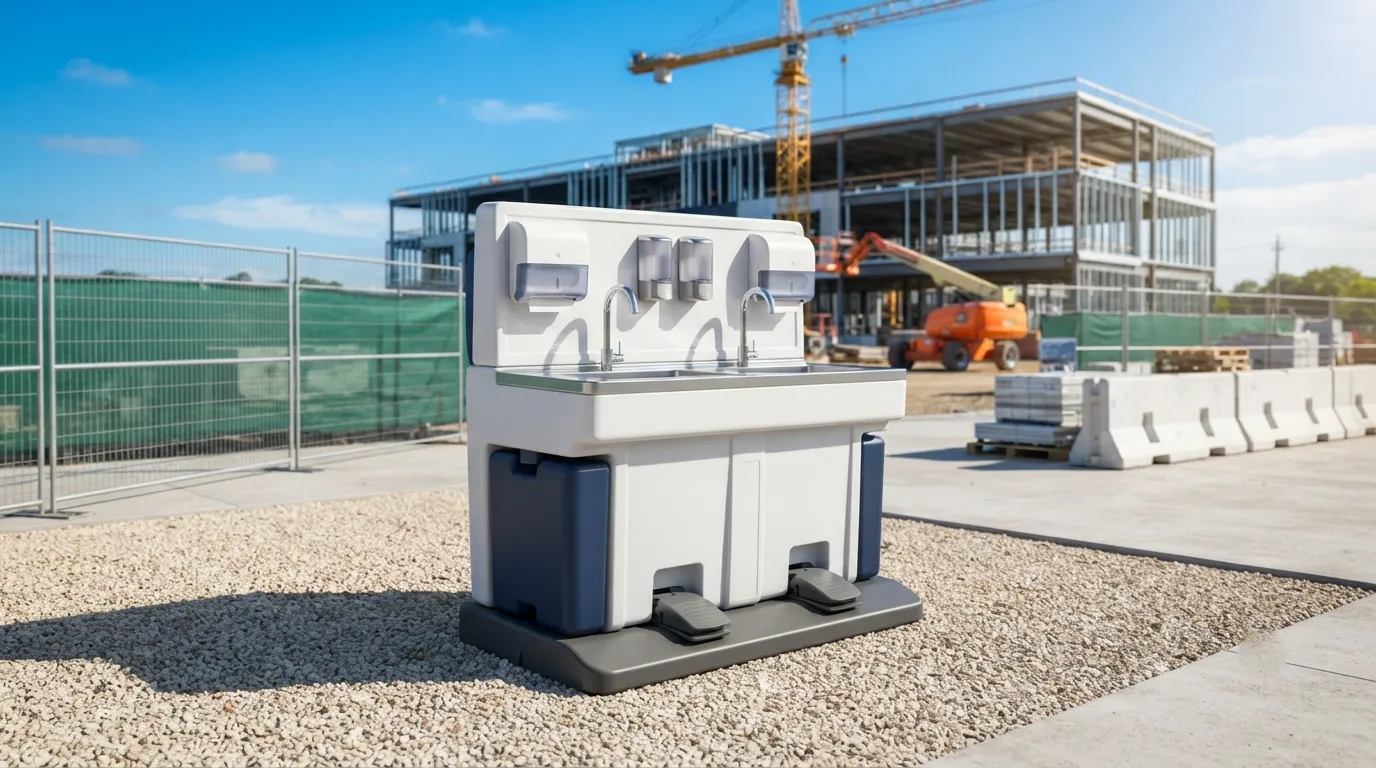
Handwashing stations belong within a short walk of every toilet cluster, and OSHA 1926.51(c) sets the ratio that drives how many toilets you need in the first place: one facility for 20 workers or fewer on a construction site. Pair each cluster with a station from handwashing station rental or a portable sink rental, and if a station needs parts, an ozark river portable sink replacement parts search usually points to the same faucet and pump kits we stock for service calls. For grease traps, a grease interceptor is pumped once fats, oils, grease and solids hit 25 percent of the liquid depth, and that placement decision belongs to grease trap pumping planning, not the toilet layout. Residential tanks are a longer cycle: a typical septic tank gets pumped every 3 to 5 years depending on size and household count, covered in how often to pump a septic tank. If you're outside Beaumont proper, a placerville septic pumping service search won't return local results here, but septic pumping service covers Beaumont and the drive out to Lumberton, 13.7 miles north.
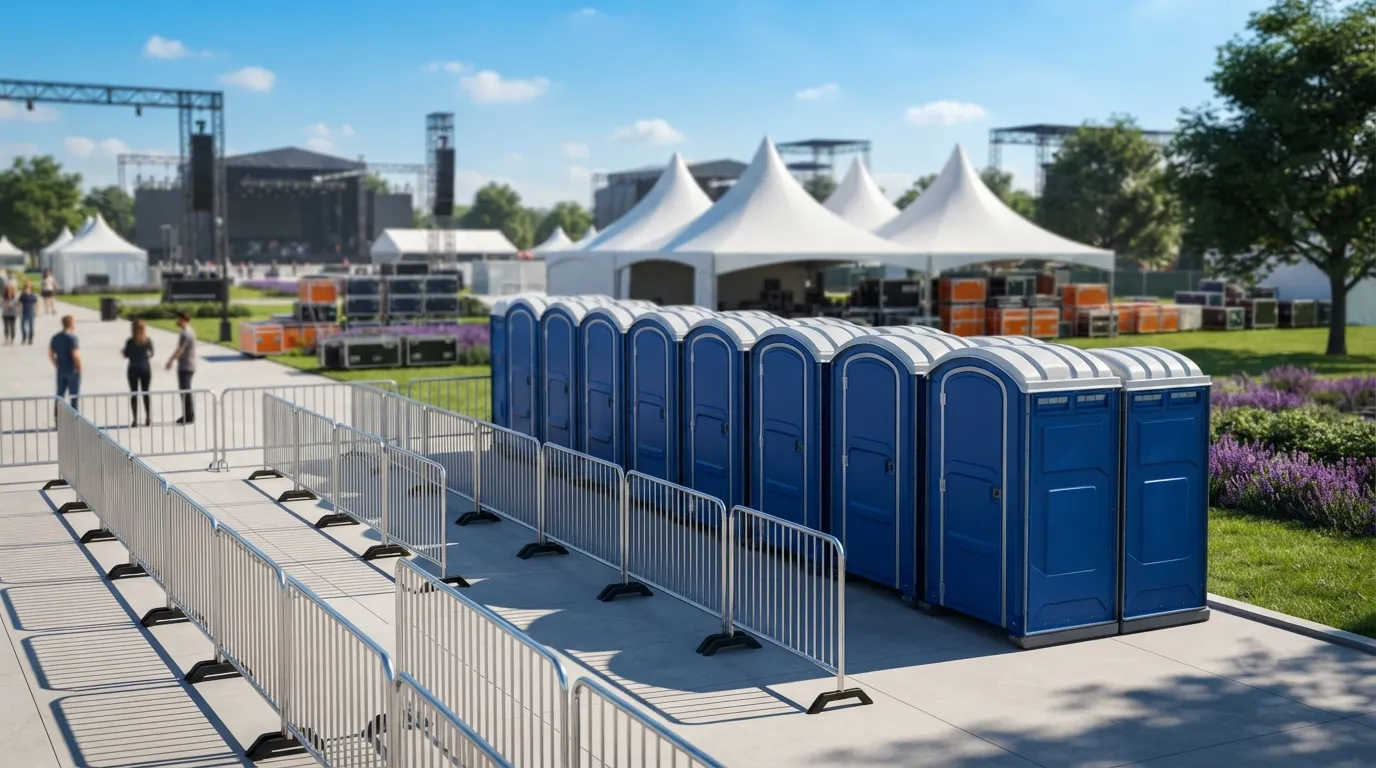
For events, placement gets tighter. A wedding or festival crowd needs units near the flow of foot traffic but out of sightlines, which is why event restroom rental and festival restroom rental planning starts with a site map, not a headcount. Temporary fencing often runs the perimeter of the placement zone too; see temporary fence rental for panel spacing that keeps foot traffic away from tanks and hoses.
How far from a building should a porta potty sit?
Five feet minimum from doors, windows and fresh-air intakes is the safe baseline. Closer placement causes odor complaints inside the building. On tight urban lots in Beaumont, that distance sometimes forces a compromise, so we walk the site first and suggest the best legal spot within that constraint.
Can I place a porta potty on pavement or does it need to be on grass?
Pavement works fine and often drains better than grass. What matters more is level ground and truck access for weekly service. Grass gets soft after Beaumont's heavier rain events, so pavement or gravel pads are usually the more stable choice for multi-week rentals.
What if my site has no flat ground?
We bring leveling blocks for minor slope, but anything beyond a few degrees needs a different spot. Steep grades risk tipping and make the ADA accessible porta potty unusable, since ADA Standards section 405.2 caps ramp slope at 1:12 for any approach.
Do I need one accessible unit or several?
ADA Standards section 213.2 requires at least 5 percent of a clustered group be accessible, and never fewer than one. A 10-unit bank needs one ADA unit minimum; smaller clusters still need that one.
How much does placement change my rental cost?
Placement itself doesn't carry a line-item fee, but hard-to-reach sites can affect delivery. Check porta potty rental cost and porta potty rental per day for current pricing bands before you finalize a site plan.
Next step
Get a delivery date
Tell us the address, the dates and the headcount. We size the order and confirm the route.